Exhibitions to Watch
Landmark Museum Shows Shaping the Art Conversation
For collectors, curators, and art travelers alike, major museum exhibitions offer more than cultural enrichment—they provide context. They clarify legacy, reposition artists within art history, and often influence both scholarly discourse and market perception. The upcoming exhibition calendar from late 2025 through 2027 reflects a renewed institutional focus on legacy artists, modernist foundations, and the evolving narratives that shape how art is valued and understood today.
Robert Rauschenberg at the Guggenheim
Opening October 10, 2025, Collection in Focus | Robert Rauschenberg: Life Can’t Be Stopped at the Solomon R. Guggenheim Museum anchors the global celebration of Rauschenberg’s centennial. Featuring more than a dozen seminal works from the Guggenheim’s collection alongside major loans from the Robert Rauschenberg Foundation, the exhibition highlights the artist’s radical material experimentation and media hybridity.
The return of Barge (1962–63)—a 32-foot silkscreen masterpiece not shown in New York for nearly 25 years—marks a rare opportunity to experience one of Rauschenberg’s most ambitious works in person. For collectors, the exhibition reinforces Rauschenberg’s central role in reshaping postwar American art and continues the institutional validation that sustains long-term market confidence.
Frida Kahlo and the Making of Myth
At the Museum of Fine Arts Houston, Frida: The Making of an Icon (January 19–May 17, 2026) moves beyond monographic presentation to examine how Frida Kahlo became one of the most recognizable figures in art history.
Rather than focusing solely on Kahlo’s own work, the exhibition interrogates her posthumous legacy, tracing how identity, politics, disability, and popular culture converged to create a global icon. With 120 works by artists across five generations, the show provides a broader lens on influence—an increasingly important factor in understanding cultural and market relevance.
Raphael at the Metropolitan Museum of Art
Spring 2026 brings a rare historical cornerstone: Raphael: Sublime Poetry at the Metropolitan Museum of Art (March 29–June 28, 2026). The first comprehensive Raphael exhibition in the United States, it assembles more than 200 works spanning drawings, paintings, and tapestries.
This exhibition situates Raphael not only as a master of form but as a thinker deeply engaged with poetry, philosophy, and power. For collectors of Old Master works, exhibitions of this scale often recalibrate scholarship, attribution, and long-term valuation.
Modern and Contemporary Voices in Dialogue
Several exhibitions in 2026 place modern and contemporary practices in conversation with legacy narratives. At Dia Beacon, Agnes Martin: Painting Is Not Making Paintings revisits the artist’s pivotal transition toward abstraction, foregrounding her philosophy that meaning resides with the viewer rather than the object itself.
Meanwhile, Museum of Modern Art presents Marcel Duchamp (April 12–August 22, 2026), the first major Duchamp exhibition since 1973. With more than 300 works, the show is poised to reassert Duchamp’s foundational influence on conceptual and contemporary art—an influence still felt across today’s market.
Global Icons and Cultural Reframing
Internationally, Marina Abramović will become the first living female artist to receive a major solo exhibition at Venice’s Gallerie dell’Accademia, coinciding with the 2026 Venice Biennale. In the U.S., SFMOMA’s Matisse’s Femme au Chapeau: A Modern Scandal and the Guggenheim’s Guggenheim Pop further underscore institutions’ renewed interest in modernist disruption and cultural critique.
Why These Exhibitions Matter
For collectors, exhibitions like these do more than showcase masterpieces—they shape narratives. Institutional attention reinforces historical importance, informs future scholarship, and often precedes renewed market interest. At International Art Acquisitions, we view museum exhibitions as essential reference points—tools that help collectors understand not just what art is worth today, but why it continues to matter tomorrow.
-
Five Art Exhibitions to See This Fall
Explore five must-see fall 2026 art exhibitions featuring Robert Ryman, Lucio Fontana, Roy Lichtenstein, Georgia O’Keeffe, and Lee Krasner and Jackson Pollock.
-
Nicholas Roes: Remain Present Opens September 24 at International Art Acquisitions
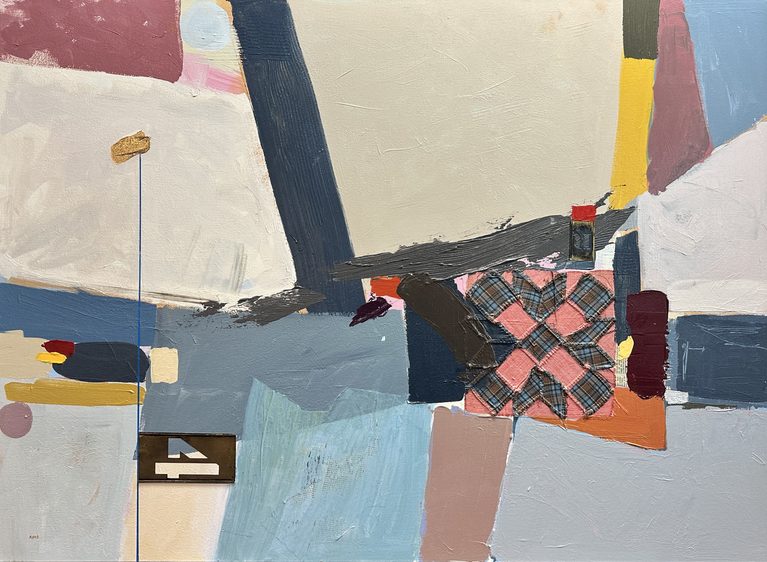
Contemporary abstract painting by Nicholas Roes featured in Remain Present, opening September 24, 2026, at International Art Acquisitions in Rochester, NY.
-
Art Basel 2026 Signals a More Selective — and More Stable — Art Market
The opening days of Art Basel 2026 offered an important snapshot of today’s global art market. While the fair reported strong sales across multiple sectors and price points, the prevailing theme was not speculation or urgency—it was selectivity. According to reporting by Elisa Carollo for Observer, collectors arrived in Basel ready to buy, but with…
-
Paris Proves Its Place
Art Basel Paris 2025 confirms the strength of the global art market, with record sales, diverse talent, and renewed confidence across collectors and institutions.
-
Why Art Philanthropy Matters
Art philanthropy fuels creativity, equity, and access. From local programs to major museums, every gift helps the arts inspire and thrive.
-
Final Insight: Art Basel Hong Kong 2025 Proves the Market Is Soft—But the Ideas Are Anything But
Art Basel Hong Kong 2025 embraced bold ideas over big sales, highlighting regional voices, digital critiques, and thoughtful, conceptual presentations.