Five Art Exhibitions to See This Fall
Fall is traditionally one of the busiest seasons in the art world, and 2026 brings a particularly strong group of exhibitions reconsidering some of the most influential artists of the twentieth century. From Robert Ryman’s quiet investigation of what makes a painting a painting to Roy Lichtenstein’s transformation of mass-media imagery, these exhibitions offer opportunities to revisit familiar names from new perspectives.
Here are five exhibitions worth adding to your calendar this fall.
Robert Ryman: The Real Thing
Barbican Art Gallery, London
October 8, 2026–February 28, 2027
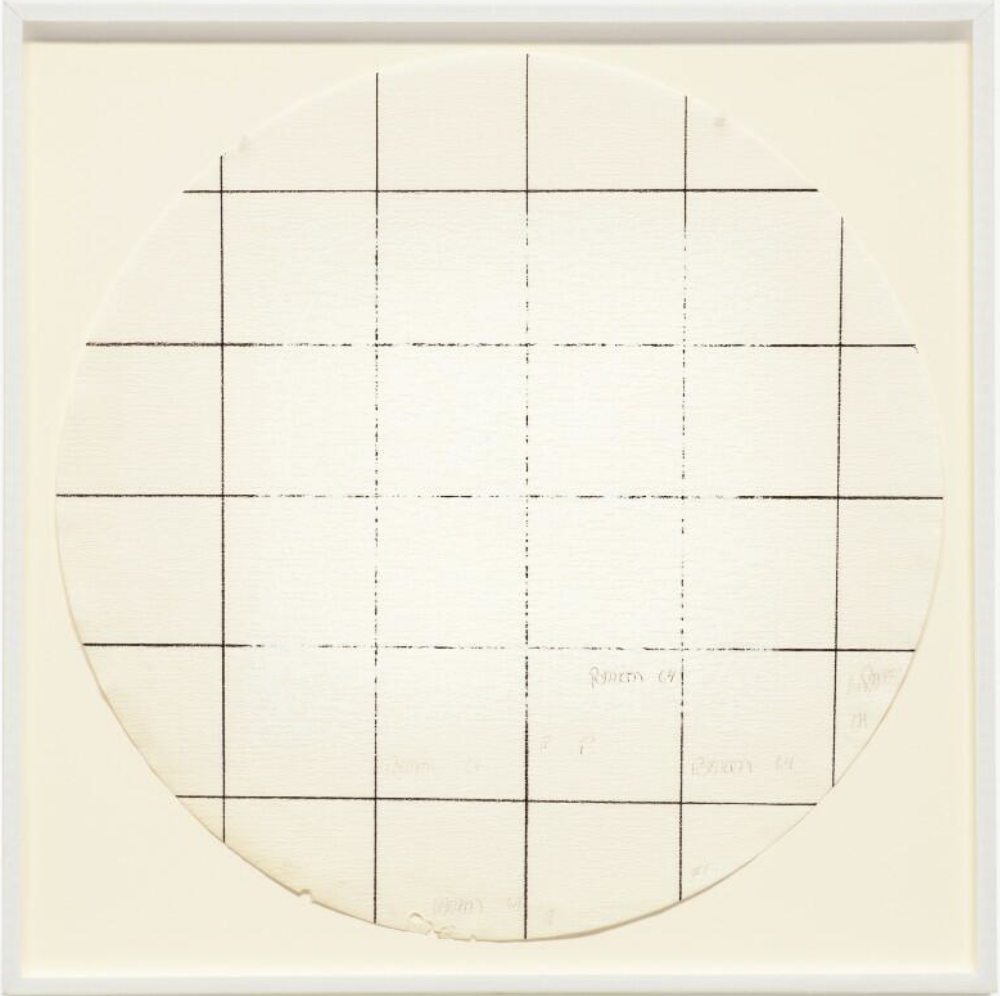
Robert Ryman made a career from seemingly simple parameters: predominantly white paint, square formats, and a persistent investigation into the physical construction of painting. Look closely, however, and differences in brushwork, surface, support, fastening, light, and scale become the subject.
The Barbican’s The Real Thing brings together more than 60 works spanning the mid-1950s through the early 2010s. It is the first major UK exhibition devoted to Ryman in more than 30 years and offers a broad view of an artist who continually questioned where a painting begins and ends.
Ryman believed strongly in experiencing paintings firsthand—a particularly resonant idea in an era when much of our encounter with art happens through screens. His subtle surfaces make reproduction inherently incomplete; changes in texture, material and surrounding light become apparent only when standing before the work.
Lucio Fontana: Spatialism: Pioneering the Contemporary
Hauser & Wirth
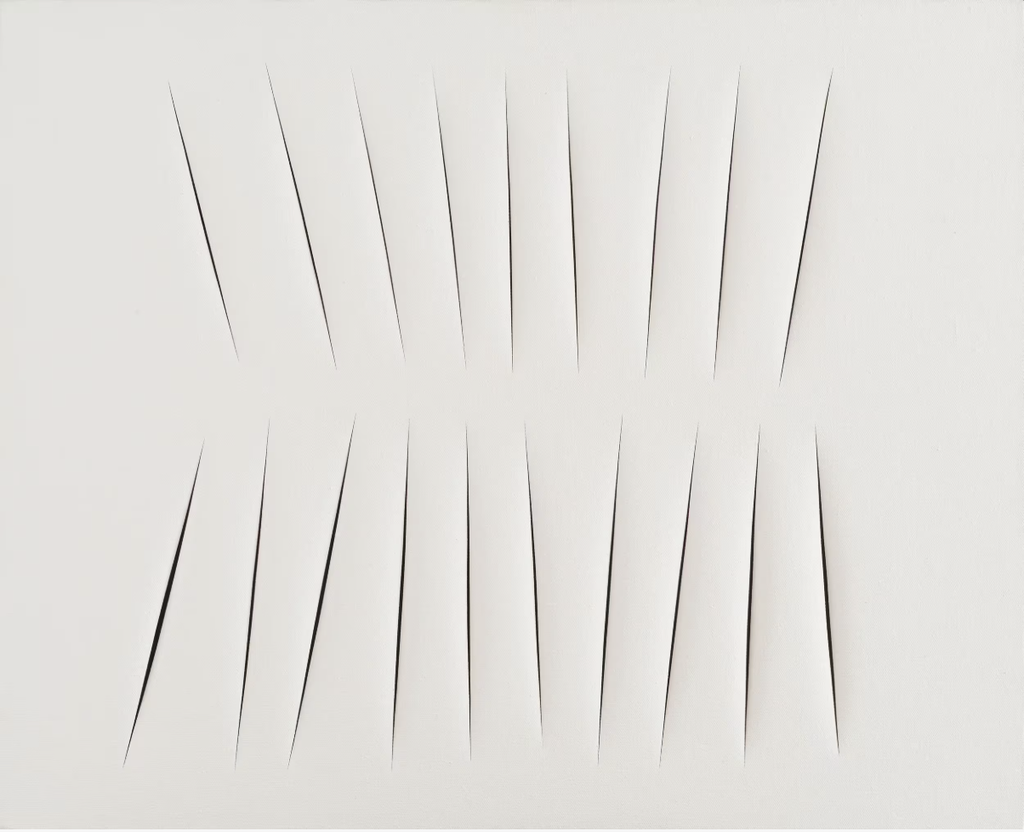
Few gestures in twentieth-century painting are as immediately recognizable as Lucio Fontana’s cuts through the canvas. Yet reducing Fontana to the tagli, or slashed paintings, overlooks the larger ambition behind his practice.
Beginning in the postwar period, Fontana sought to move beyond the traditional limits of painting and sculpture. His Spatialist ideas treated the canvas not simply as a surface on which to create an image, but as a physical object occupying actual space. Piercing or cutting through it allowed the space behind the canvas to become part of the work itself.
Spatialism: Pioneering the Contemporary provides an opportunity to reconsider Fontana’s practice through this broader idea. His influence can be felt far beyond the works for which he is best known, anticipating later developments in installation, conceptual art and artists’ continuing experiments with the boundaries between painting and object.
Roy Lichtenstein: Like New
Whitney Museum of American Art, New York
October 11, 2026–May 10, 2027
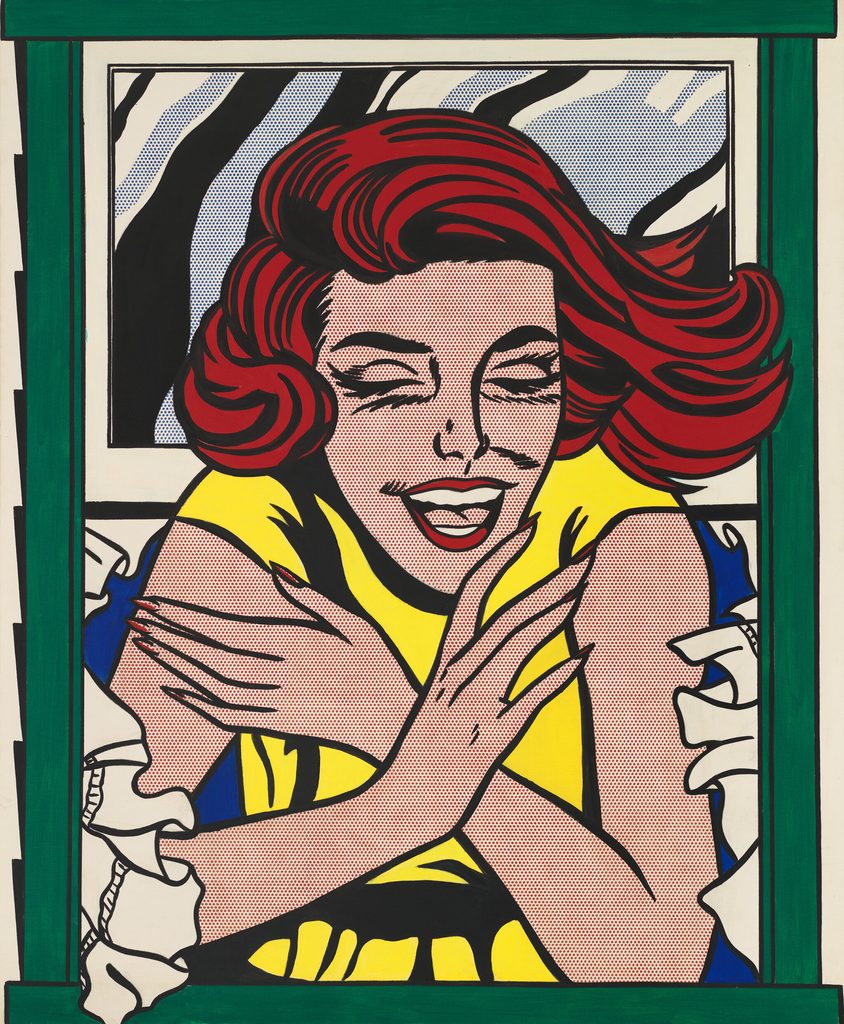
Roy Lichtenstein’s comic-inspired paintings have become inseparable from the history of Pop Art, but the Whitney’s major new survey looks beyond the familiar Benday dots.
Bringing together approximately 130 works from the early 1940s through the 1990s, Like New examines Lichtenstein’s longstanding fascination with how images are constructed, copied, enlarged and circulated. Painting, drawing, collage, prints, sculpture and film reveal an artist continually investigating the relationship between handmade objects and mechanically reproduced imagery.
Among the works are Look Mickey, Girl with Ball, Masterpiece, Drowning Girl and Happy Tears. The exhibition also reunites the works from Lichtenstein’s landmark 1962 exhibition of Pop paintings at Leo Castelli Gallery and includes a recreation of the nearly 96-foot-long Greene Street Mural.
More than sixty years after Lichtenstein began borrowing from advertising and comics, his questions surrounding copying and image circulation feel remarkably contemporary. In today’s world of endlessly reposted, altered and digitally generated images, Like New offers an opportunity to reconsider just how prescient those investigations were.
Georgia O’Keeffe: Architecture
Detroit Institute of Arts, Detroit
September 11, 2026–January 3, 2027
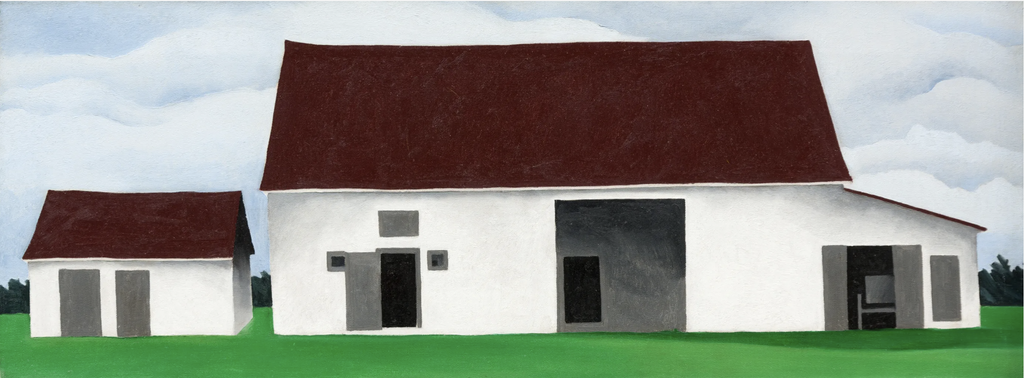
Flowers, bones and the desert landscape may dominate the popular understanding of Georgia O’Keeffe, but architecture occupied an important place in her work for decades.
The Detroit Institute of Arts brings that lesser-known interest to the foreground in Georgia O’Keeffe: Architecture, the first exhibition dedicated specifically to the artist’s sustained engagement with the built environment. Approximately 35 works created between the 1920s and 1960s trace subjects ranging from New York skyscrapers to rural farm buildings and the adobe architecture surrounding her homes in New Mexico.
The exhibition provides an interesting counterpoint to O’Keeffe’s better-known landscapes. Buildings become arrangements of geometry, color and light, revealing how closely her observations of constructed and natural environments were connected.
At its center is the DIA’s own Stables (1932), surrounded by works that demonstrate O’Keeffe’s ability to reduce architecture to essential relationships of shape, line and color.
Krasner and Pollock: Past Continuous
The Metropolitan Museum of Art, New York
October 4, 2026–January 31, 2027
Lee Krasner and Jackson Pollock are inseparable from the history of Abstract Expressionism, but their place within that history has not always been presented equally.
Krasner and Pollock: Past Continuous approaches the two artists as distinct creative figures whose lives and practices nevertheless developed in close conversation. They met in New York in 1941, married in 1945, and moved to Springs, Long Island, where their personal and artistic lives remained intertwined until Pollock’s death in 1956.
Rather than positioning Krasner simply alongside her more historically celebrated husband, the exhibition considers both artists on their own terms while examining their influence upon one another. The accompanying project spans their careers before they met, their years together and Krasner’s work after Pollock’s death, placing her collage and painting practice alongside Pollock’s experiments with poured paint and gesture.
The exhibition also reflects a broader reassessment of Abstract Expressionism—one that recognizes Krasner not as a peripheral participant in the movement but as an artist central to the innovations of postwar American painting.
A Season for Looking Again
Taken together, these exhibitions share an interesting thread: each asks us to reconsider something we think we already know.
Ryman asks us to look beyond white paint and notice the physical reality of painting. Fontana transforms a cut in the canvas into an exploration of space. Lichtenstein complicates the distinction between original and reproduced imagery. O’Keeffe reveals architecture as an important counterpart to her celebrated natural subjects. And Krasner and Pollock are reconsidered through a more balanced examination of two interconnected but independent artistic practices.
That may be what makes this fall’s exhibition calendar particularly compelling. These are not simply opportunities to encounter important names in modern art—they are invitations to look again, more slowly, at artists whose work continues to shape how we understand painting today.
-
Nicholas Roes: Remain Present Opens September 24 at International Art Acquisitions
Contemporary abstract painting by Nicholas Roes featured in Remain Present, opening September 24, 2026, at International Art Acquisitions in Rochester, NY.
-
Art Basel 2026 Signals a More Selective — and More Stable — Art Market
The opening days of Art Basel 2026 offered an important snapshot of today’s global art market. While the fair reported strong sales across multiple sectors and price points, the prevailing theme was not speculation or urgency—it was selectivity. According to reporting by Elisa Carollo for Observer, collectors arrived in Basel ready to buy, but with…
-
Understanding Freeports in the Art Market
The growth of freeports parallels the broader globalization of the art market. As artwork values increased dramatically during the late twentieth and early twenty-first centuries, collectors increasingly managed collections across multiple countries and legal jurisdictions.
-
Record Setting Pollock and Brancusi Sales Headline Spring Auctions
Recent sales at Christie’s saw record-setting results for Jackson Pollock and Constantin Brancusi, reinforcing continued demand for rare and historically important modern works.
-
Robert Mnuchin, Rothko, and the Continuing Strength of the Postwar Art Market
The recent sale of Mark Rothko’s Brown and Blacks in Reds from the collection of Robert Mnuchin highlighted the continued strength of the postwar art market and Mnuchin’s lasting influence as both a collector and dealer.
-
What Major Auctions Reveal About Collecting Today
Major spring auctions reveal how great collections are built through vision, timing, and stewardship—offering lessons for collectors at every level.