Honoring a Visionary: Remembering Frank Stella’s Artistic Legacy
Frank Stella, an iconic figure in postwar American art, passed away at 87, leaving behind a legacy of innovation and exploration. From his groundbreaking “black paintings” to his monumental public works, Stella’s career exemplified a relentless pursuit of creativity and a commitment to pushing the boundaries of abstraction. As we reflect on his profound impact on the art world, we are reminded of the enduring importance of investing in artists and celebrating the transformative power of artistic expression.

The recent passing of Frank Stella, a towering figure in postwar American art, marks the end of an era defined by innovation and exploration. Stella’s career spanned over five decades, during which he continually pushed the boundaries of color, form, and medium, leaving an indelible mark on the art world.
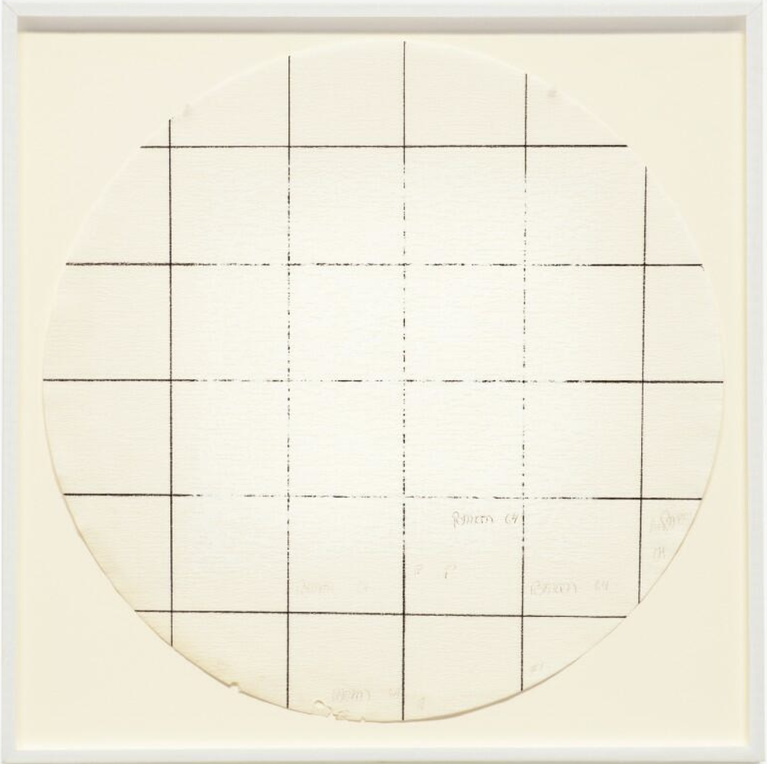
Born in Malden, Massachusetts, in 1936, Stella’s early works, particularly his iconic “black paintings” of the late 1950s, signaled a departure from Abstract Expressionism towards a cooler, minimalist aesthetic. These austere yet mesmerizing compositions, characterized by precisely delineated black stripes on blank canvas, captured the attention of the art world and solidified Stella’s reputation as a visionary artist.

Throughout his career, Stella remained a master of reinvention, constantly exploring new techniques and concepts. In the 1960s, he infused his stripe formula with vibrant colors and experimented with shaped canvases, while the ambitious “Protractor” series showcased his bold use of brilliant hues and monumental scale.
In the following decades, Stella continued to evolve his style, embracing maximalism with exuberant assemblages of painted aluminum and exploring the intersection of painting and sculpture. His monumental public works, such as the murals for the Gas Company Tower in Los Angeles and the iconic bandshell in Miami, further cemented his status as a pioneering artist of his time.

Despite occasional criticism from some quarters, Stella enjoyed widespread acclaim and commercial success throughout his career, with numerous one-man shows and retrospectives at prestigious museums around the world. His influence on abstraction was profound, with critics likening it to the impact of Bob Dylan on music and Andy Warhol on contemporary art.
Stella’s legacy extends beyond his artistic achievements; he was also a trailblazer in the academic sphere, becoming the first abstract artist to deliver the Charles Eliot Norton lecture at Harvard. His contributions to the art world were recognized with prestigious honors, including retrospectives at the Museum of Modern Art and the Whitney Museum of American Art.
As we reflect on Frank Stella’s remarkable career and mourn his passing, we are reminded of the enduring importance of investing in artists and the arts. Stella’s relentless pursuit of innovation and his unwavering commitment to his craft serve as an inspiration to future generations of artists, reminding us of the transformative power of creativity and the limitless possibilities of artistic expression.
Citations: “Frank Stella, Who Made Abstract Art Burst With Dynamism, Dies at 87” by Holland Cotter and “Frank Stella, towering figure of American abstraction, dies aged 87” by Jason Farago.
-
Five Art Exhibitions to See This Fall
Explore five must-see fall 2026 art exhibitions featuring Robert Ryman, Lucio Fontana, Roy Lichtenstein, Georgia O’Keeffe, and Lee Krasner and Jackson Pollock.
-
Nicholas Roes: Remain Present Opens September 24 at International Art Acquisitions
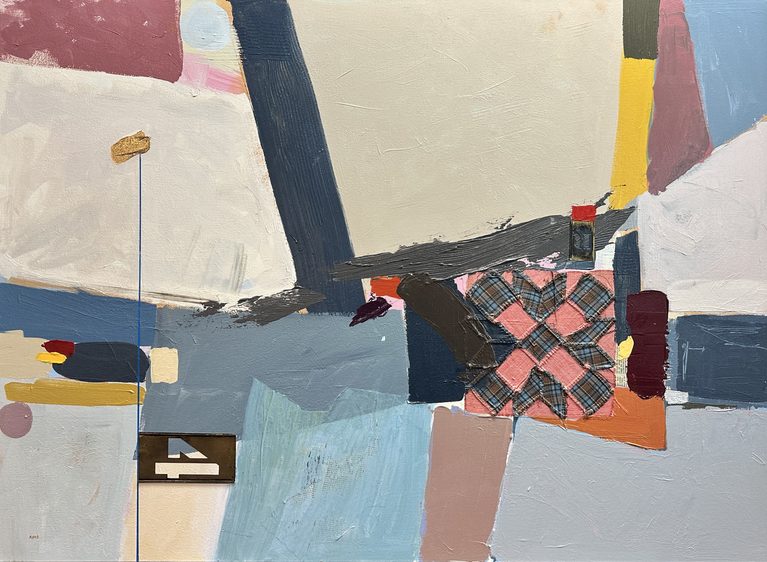
Contemporary abstract painting by Nicholas Roes featured in Remain Present, opening September 24, 2026, at International Art Acquisitions in Rochester, NY.
-
Art Basel 2026 Signals a More Selective — and More Stable — Art Market
The opening days of Art Basel 2026 offered an important snapshot of today’s global art market. While the fair reported strong sales across multiple sectors and price points, the prevailing theme was not speculation or urgency—it was selectivity. According to reporting by Elisa Carollo for Observer, collectors arrived in Basel ready to buy, but with…